
Sterilization Methods in Dentistry: Keeping Patients Safe
When you sit in a dental chair, the last thing on your mind should be whether the tools being used are clean. Yet sterilization is one of the most important parts of any dental visit. Every responsible dentist near me and across the country follows strict protocols to make sure patients are protected from infection.
At Wiemeyer Dentistry in Duxbury, MA, patient safety is not an afterthought. It is built into every step of care, starting before you even open your mouth.
Why Sterilization Matters in Dental Care
Dental tools go into your mouth. They touch your gums, teeth, and soft tissue. Without proper cleaning, harmful bacteria and viruses can transfer from one patient to another.
Common risks from poorly sterilized tools include:
- Hepatitis B and C
- HIV (in very rare cases)
- Staph infections
- Fungal infections
The good news is that with the right sterilization steps, these risks drop to nearly zero. Most dental clinics in and around the South Shore area of Massachusetts take these protocols seriously. Still, knowing what to look for helps you make a smarter choice when picking your provider.
The Difference Between Cleaning, Disinfecting, and Sterilizing
These three words are not the same thing, and understanding the difference matters.
Cleaning removes visible dirt and debris. It is the first step but does not kill germs.
Disinfecting reduces most bacteria and viruses on a surface. It is used for items that touch skin but not the inside of your mouth.
Sterilizing kills all forms of microbial life, including spores. This is required for any tool that enters the mouth or breaks the skin.
Dental offices must sterilize instruments every single time they are used.
Common Sterilization Methods Used in Dentistry
Steam Autoclave
The autoclave is the gold standard in dental sterilization. It uses high-pressure steam at around 270°F to kill bacteria, viruses, and spores. Most tools like forceps, scalers, and mirrors go through this process.
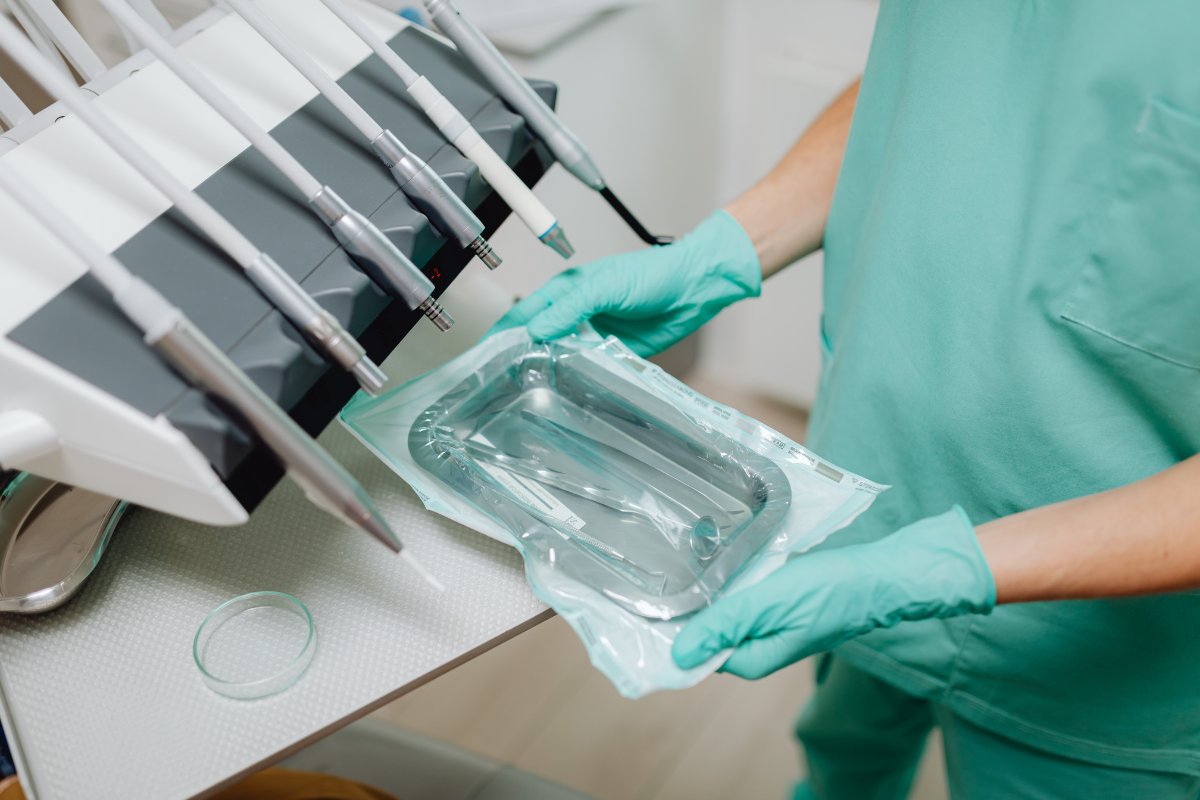
A full cycle takes about 30 to 60 minutes. After sterilization, instruments are sealed in pouches and stored until use.
Dry Heat Sterilization
Some tools that cannot handle moisture are sterilized using dry heat. This method uses high temperatures (around 320°F) over a longer period. It works well for certain metals and glass instruments.
Chemical Vapor Sterilization
This method uses a mix of chemicals and heat to sterilize tools. It is gentler on certain instruments and helps prevent rusting on metal tools.
Cold Chemical Sterilization (High-Level Disinfection)
For items that cannot withstand high heat, such as flexible scopes or certain impression trays, a chemical soak is used. This process takes several hours and must follow strict guidelines.
Single-Use Items: An Added Layer of Protection
Not everything gets sterilized and reused. Many dental items are designed to be used once and thrown away. These include:
- Needles and syringes
- Gloves
- Gauze
- Saliva ejectors
- Some suction tips
Disposable items remove any chance of cross-contamination. A good dentist near me will always use fresh gloves and single-use tools for every patient, no exceptions.
How Dental Offices Check That Sterilization Is Working
Just running a cycle is not enough. Dental offices must verify that sterilization is actually working. There are three ways this is done:
Physical Monitoring tracks time, temperature, and pressure during each cycle.
Chemical Indicators are strips or tape that change color when the right conditions are met. They go inside each pouch with the instruments.
Biological Indicators (spore tests) are the strongest test. They use actual bacterial spores to confirm that sterilization was effective. These are run weekly in most dental offices.
Dental practices in Massachusetts must follow state board guidelines, which align with CDC and OSHA standards. These are not optional. They are the law.
What to Look for When Choosing a Dental Provider
When looking for a dentist in Duxbury or any nearby town on the South Shore, it helps to ask a few simple questions:
- Do you use an autoclave for all reusable instruments?
- How often do you run spore tests?
- Are single-use items discarded after every patient?
- Do team members wear gloves, masks, and protective eyewear?
A transparent dental team will answer these questions without hesitation. If a practice seems defensive or unclear, that is a sign to look elsewhere.
The South Shore area has many dental options. Towns like Marshfield, Kingston, Pembroke, and Hingham all have active dental communities. Whether you are searching for a dentist in Duxbury or comparing clinics across Plymouth County, the standard of care should remain consistent.
Infection Control Beyond the Instruments
Sterilization is not just about tools. The whole environment matters.
Surfaces like countertops, chair controls, and light handles are wiped down with EPA-approved disinfectants between every patient. Barrier covers (plastic wraps) are placed on handles and switches to prevent contact contamination.
The dental team also follows hand hygiene rules. Hands are washed before and after every patient interaction. Gloves are never reused.
Air quality matters too. Modern dental offices use high-volume suction and proper ventilation to reduce aerosols that spread during procedures.
Local Standards and Patient Rights
In Massachusetts, dental offices are regulated by the Board of Registration in Dentistry. Infection control compliance is reviewed during inspections. Patients have the right to ask about sterilization practices and expect honest answers.
If you are looking up a dentist near me and want to compare practices on the South Shore, you can also check Google reviews and ask for a walkthrough of the sterilization area. Reputable offices are proud of their infection control setup and happy to show you.
Simple Steps You Can Take as a Patient
You are not powerless in this process. Here is what you can do:
- Ask your dental office how they sterilize tools
- Notice whether staff change gloves between tasks
- Confirm single-use items are being opened fresh in front of you
- If something looks off, speak up
You have every right to ask questions. A caring dental team will welcome it.
Conclusion
Sterilization in dentistry is not glamorous, but it is essential. It keeps you safe every time you get a cleaning, filling, or procedure done. From autoclaves to single-use needles, every step exists for one reason: to protect you.
Whether you live in Duxbury or a surrounding South Shore community, the standard of care at your dental office should never be a guessing game. As your trusted dentist in Duxbury, Wiemeyer Dentistry holds infection control to the highest standard every single day, for every single patient.
If you want to experience care that puts your safety first, schedule a consultation with Wiemeyer Dentistry today. Our team is ready to answer your questions and walk you through every part of your visit with full transparency.
Frequently Asked Questions
- How do I know if my dental office is properly sterilizing their tools?
You can ask directly. A reliable dental office will explain their sterilization process clearly. Look for pouched instruments being opened in front of you and staff changing gloves between tasks.
- Is it safe to go to the dentist during cold and flu season?
Yes. Dental offices follow strict infection control protocols year-round. High-touch surfaces are disinfected between every patient, and proper ventilation reduces airborne risks.
- What is an autoclave and why is it important?
An autoclave is a device that uses pressurized steam to kill all microorganisms on dental tools. It is the most effective sterilization method available and is required for reusable instruments.
- Are dental gloves always changed between patients?
Yes. Gloves are single-use items and must be changed after every patient. They should also be changed if torn or contaminated during a procedure.
- How often should spore testing be done in a dental office?
Spore tests should be performed at least weekly to confirm that sterilization equipment is working correctly. Results are logged and kept on file.
- Can I request to see the sterilization area at a dental office?
Absolutely. Most dental offices are happy to walk patients through their setup. Transparency is a good sign of a trustworthy practice.
- What happens if a sterilization test fails?
If a spore test fails, the equipment is taken out of service immediately. All instruments processed since the last passing test are recalled, and the equipment is inspected and retested before use resumes.
- Do all dental tools need to be sterilized after every use?
Any tool that enters the mouth or contacts mucous membranes must be sterilized after every use. Items that only touch intact skin require high-level disinfection. Single-use items are discarded after one use.
